Cortical responses to balance perturbations persist without active postural control
Do cortical balance responses, such as the Balance N1, really depend on balance?
Status: Published
People: Daphne Jansen, Lucas Mensink, Matto Leeuwis, Patrick Forbes
Topics: posture, eeg, brain, "Balance, N1"
Date:
Link: External →
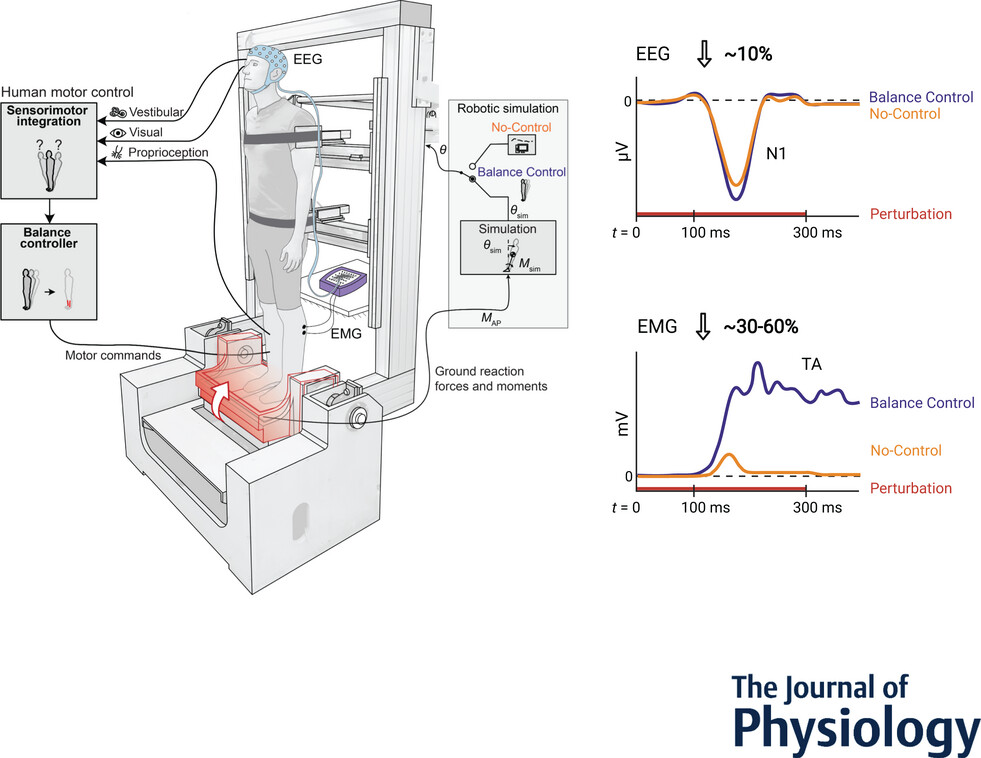
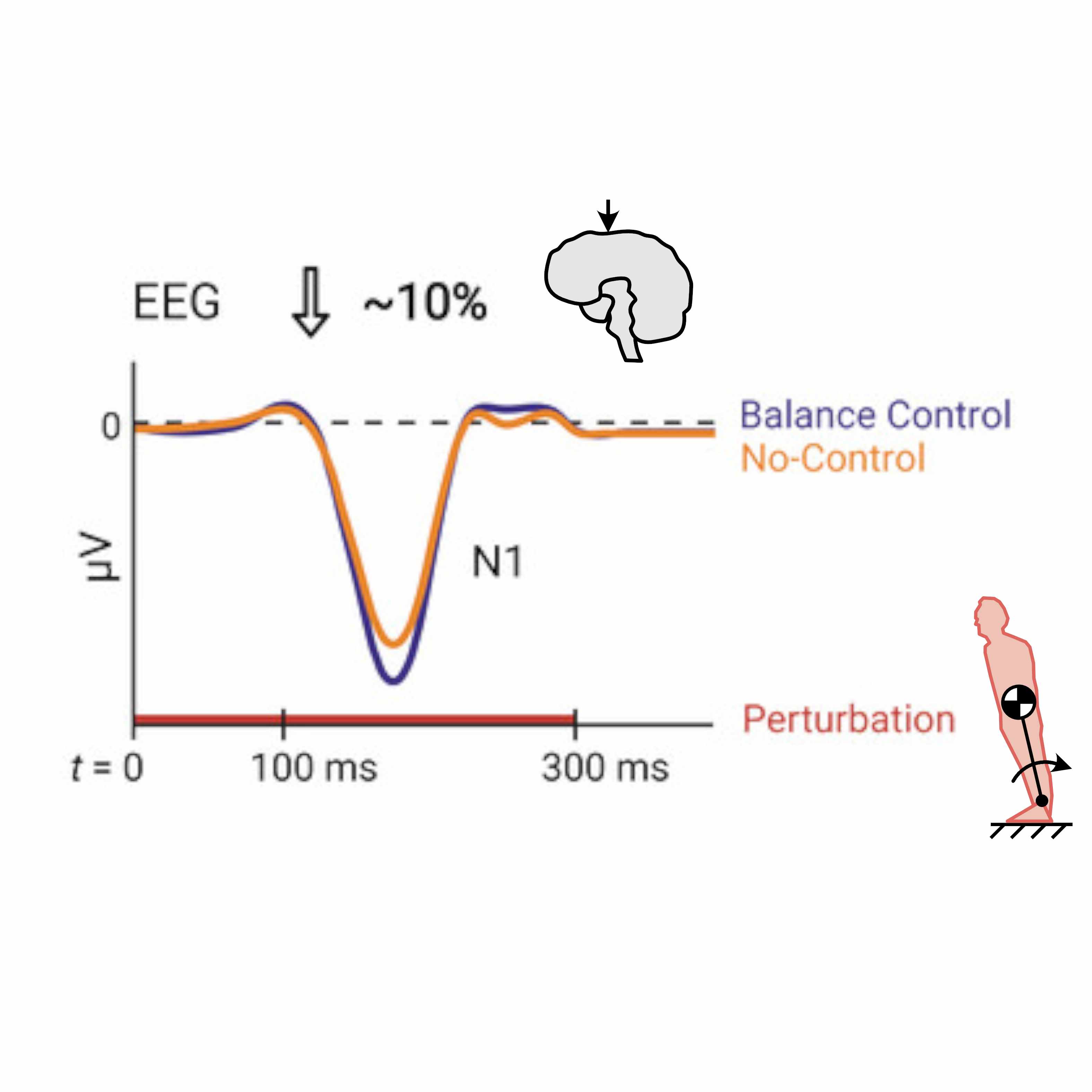
When standing balance is disturbed by a perturbation, the brain shows characteristic electrical responses called the balance N1 and theta activity, which are thought to contribute to balance-correcting actions. We tested whether these cortical responses depend on actively controlling posture or instead reflect the detection of unexpected motion irrespective of balance conditions. Participants stood in a robotic balance simulator and experienced identical perturbations while actively balancing or being passively moved, and when whole-body sensory feedback and muscle engagement were removed. The balance N1 and theta activity persisted in conditions where participants were not controlling their movement and even when whole-body sensory feedback and motor engagement were removed, whereas balance-correcting muscle responses were strongly diminished. This shows that cortical responses to balance perturbations are not specific to active balance control but probably represent the brain’s detection and evaluation of unexpected sensory events.