Energetic optimization in standing and gait initiation
Are balance and gait intitiation driven by a minimization of energy expenditure?
Status: Published
People: Matto Leeuwis, Nikki van Aerts, Ajay Seth, Patrick Forbes
Topics: posture, biomechanics, OpenSim, gait
Date:
Link: DOI →
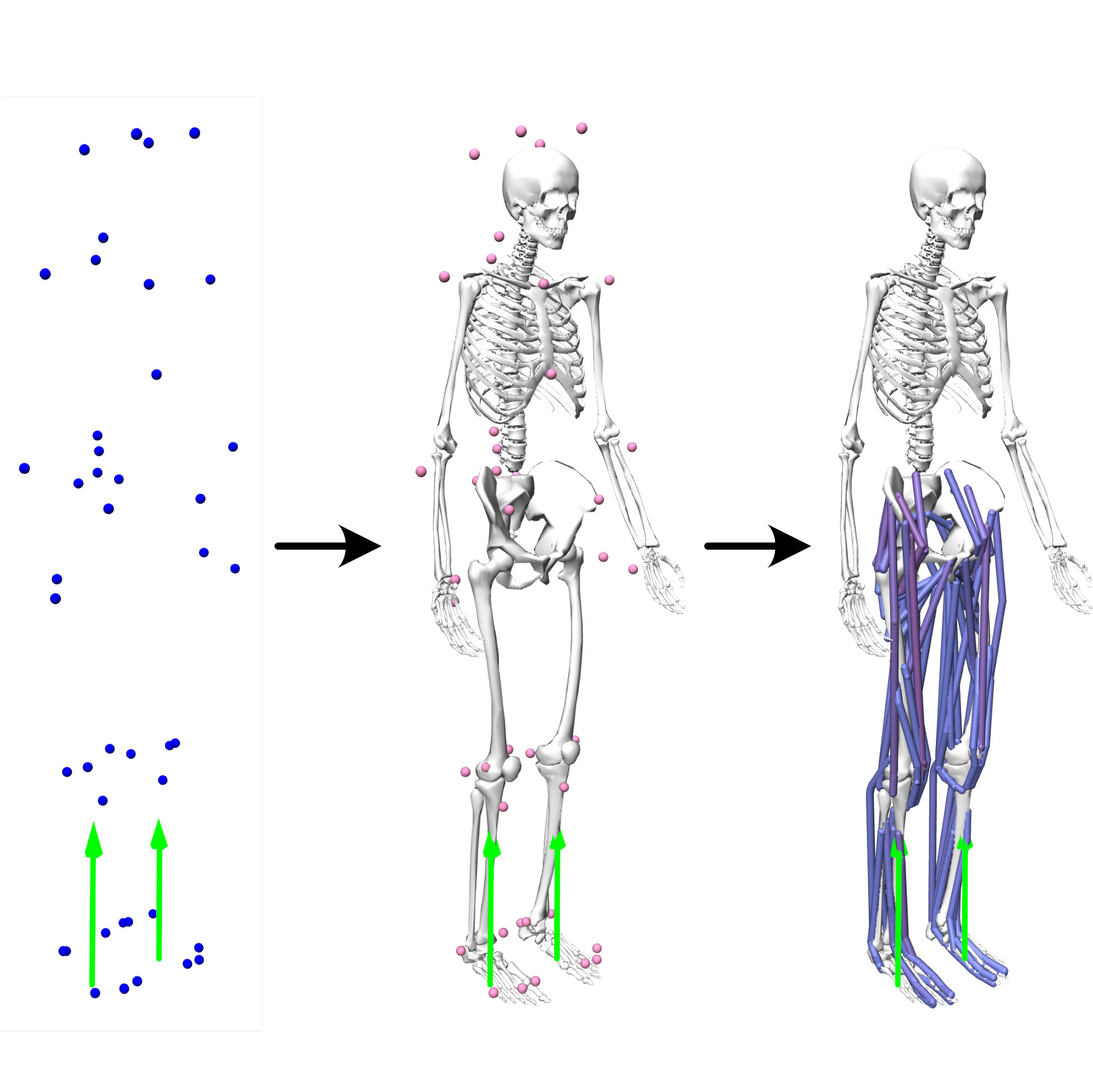
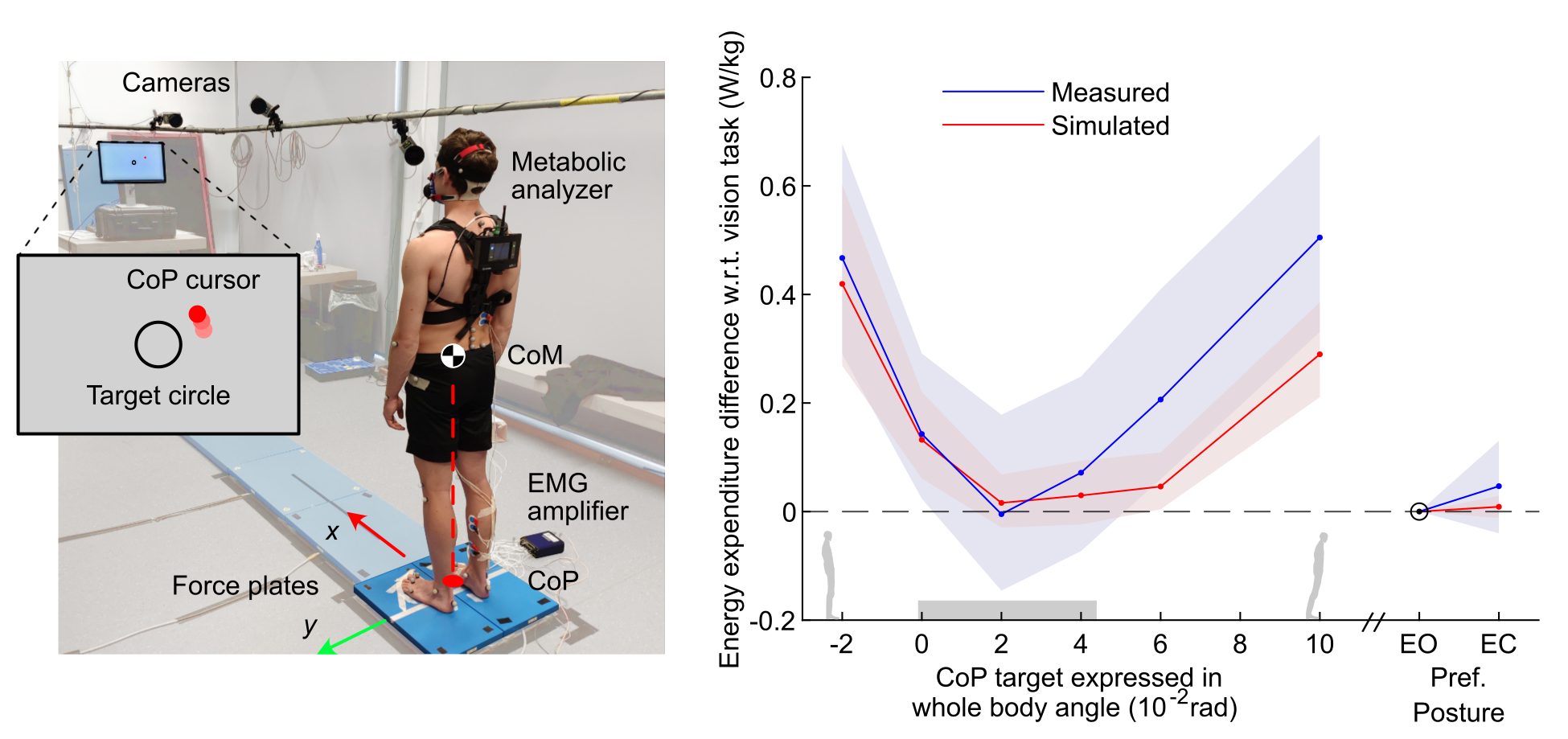
In this study, we investigated whether energy expenditure helps explain how humans select their standing posture. We quantified the energetic cost of standing at various lean angles using indirect calorimetry and musculoskeletal simulations, and found that participants stood close to the lowest-cost angle. Leaning backward incurred an additional energetic cost at twice the rate of forward-leaning postures, which was captured by musculoskeletal simulations but is often omitted in balance control models. Because standing is our idle state from which locomotion is initiated, we also considered how posture changes the energetic cost of walking initiation, and whether expecting to walk forward or backward alters this preference. Interestingly, participants did not change their posture in preparation for the known walking direction, consistent with simulations showing that the energetic benefit of doing so was small. These findings show that energetic cost helps explain preferred human posture during standing and prior to gait initiation, but also reveal that commonly used symmetric assumptions about control effort in inverted pendulum models are inaccurate. Our results provide an experimental basis for the cost landscape that can improve simulations of human standing balance and gait initiation.
Paper: PLOS Computational Biology
Data: DataVerseNL