Robohopper
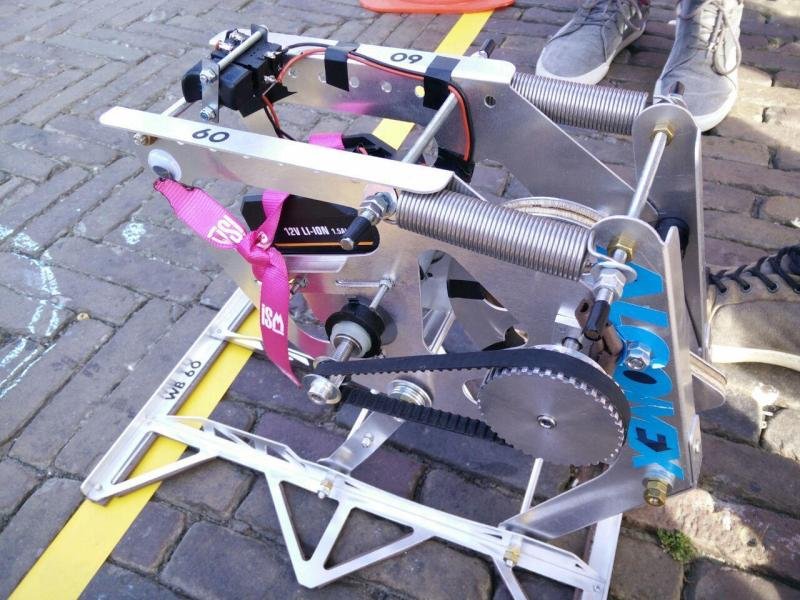
A hopping robot built developed as the first-year mechanical engineering BSc capstone project at TU Delft.
Status: Complete
People: Group project
Topics: robotics, mechanical engineering, education
Date:
Final project of the first year of the Mechanical Engineering BSc at TU Delft. The goal was to build a one-legged jumping robot that could race to the finish, inspired by Raibert’s hopping robots from the 1980s.
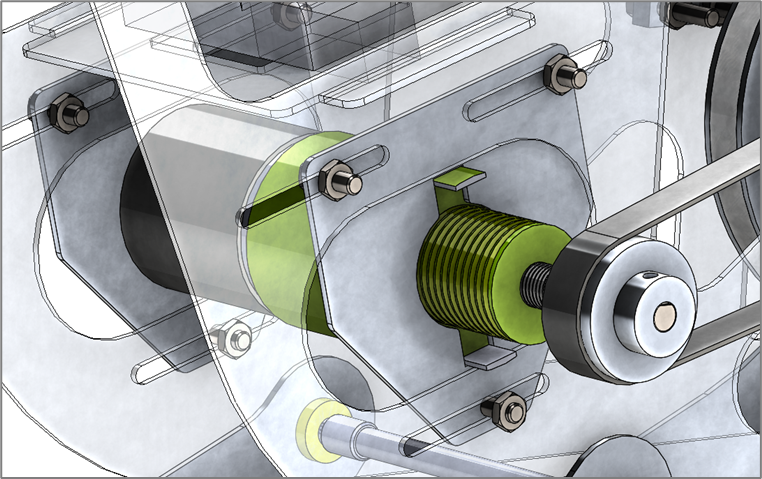
The robohopper jumps forward by lowering its body backward while loading a spring, and releasing that energy to accelerate its mass forward before its foot leaves the ground. Its actuation was constucted using a disassembled hand drill. During the competition, it scored 4th place with a distance of 38 meter in 5 minutes on the Delft market square.
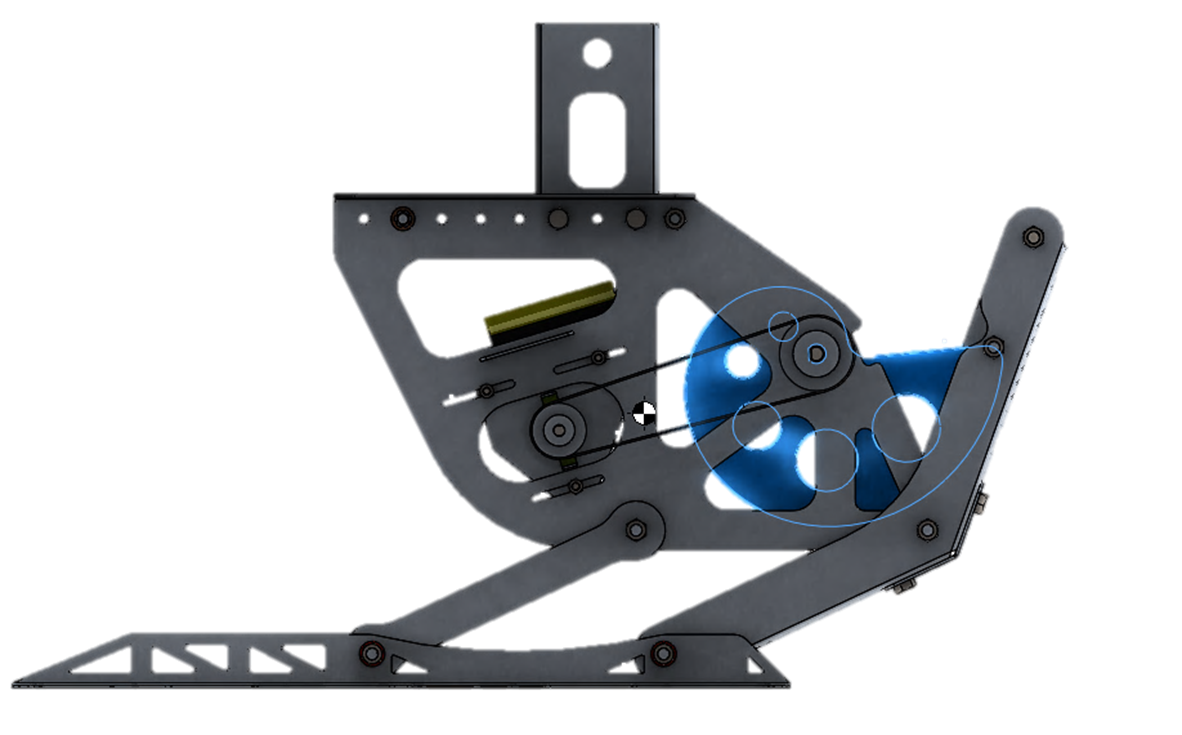
The design uses a snail cam to build up energy for a jump. Interestingly, and completely coincidentally, this is the same mechanism that was used for our mechanical ventilator project.
I now use this project as a teaching example in my lectures in the NeuroRobotics course, where we discuss how complex movements can emerge from simple systems and controllers. Biological walking, and jumping for that matter, appear hopelessly complex to control at first. By deconstructing movement from the simple controllers of Raibert’s system, the lack of controller in this Robohopper, or even the complete lack of any actuation at all (like the passive dynamic walker below), we can demonstrate that simple (neural) embeddings allow complex movements to emerge.